Why Time Management Is a Skill, Not an Instinct
Many parents assume a child who forgets homework or dawdles before school is simply being careless, but learning how to teach kids time management starts with realizing it is a skill rather than an instinct children are born with. Just as a toddler needs guided practice to learn to walk, a child needs repeated, gentle exposure to structure before they can manage their own hours. Approaching the subject with this understanding changes everything, because instead of frustration, parents can offer patient guidance, knowing that mastery comes gradually, in small steps, much like any other skill worth building over years rather than days.
Understand That Time Feels Different to a Child
Adults experience an hour as a fixed, measurable stretch, but young children often perceive time only through the events that fill it, such as snack time, nap time, or the moment a favorite show begins. Telling a five year old “we’re leaving in ten minutes” means little without a way to visualize that gap. Recognizing this difference in perception is the real starting point for how to teach kids time management, because it shifts the goal from demanding compliance toward building a bridge between abstract minutes and something a child can actually sense and understand.
Model Calm and Organized Behavior Yourself
Children absorb far more from what they watch than from what they are told, and a household’s rhythm around time is no exception, which makes modeling one of the simplest ways to approach how to teach kids time management. If mornings are consistently rushed and chaotic, a child learns to associate the clock with stress rather than structure. Narrating your own planning aloud, such as saying you will finish one task before starting the next, quietly teaches children that time can be organized calmly. Over months and years, this modeling becomes one of the most powerful, invisible lessons a parent offers.
Use Visual Timers and Clocks They Can See
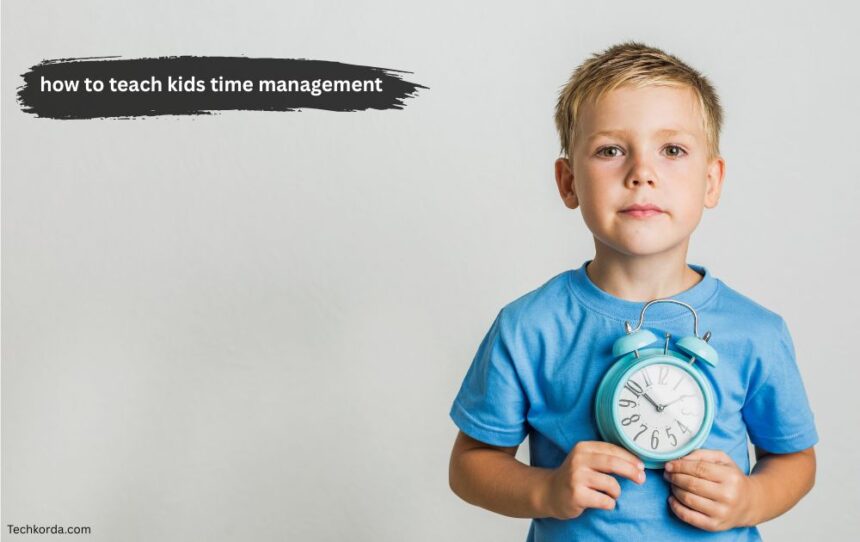
Because time is invisible, giving children a visual anchor is one of the most practical tools in how to teach kids time management. A sand timer, a colorful clock with shaded “off limits” hours, or a simple countdown app turns an abstract concept into something a child can watch unfold. This visual approach reduces power struggles significantly, since the timer, not the parent, becomes the signal that a transition is coming. Over time, children begin associating these visual cues with the natural passing of minutes, which builds a genuine internal sense of time.
Create Predictable Daily Routines
A predictable rhythm to the day, with consistent times for waking, eating, homework, and sleep, gives children an internal map they can rely on without needing constant reminders, forming a quiet backbone for how to teach kids time management at home. Routines remove the guesswork from a child’s day, which lowers anxiety and resistance around transitions. While flexibility still matters for special occasions, the backbone of a stable routine allows children to anticipate what comes next, gradually internalizing the sequence until they begin managing pieces of it independently.
Break Big Tasks into Small, Visible Steps
Instructions like “clean your room” or “get ready for school” often overwhelm children because the task has no clear starting point, which is exactly the kind of moment where how to teach kids time management becomes a practical, everyday question rather than an abstract idea. Breaking such requests into smaller, sequential steps, first the toys, then the laundry, then the shelf, gives children something concrete to act on. This approach also applies neatly to homework and long term projects, teaching children that a seemingly large block of work becomes manageable once broken into pieces.
Let Children Own Age Appropriate Responsibilities
It is often quicker for a parent to pack a backpack or lay out clothing than to wait for a child to do it themselves, but this convenience quietly delays an important part of how to teach kids time management. Giving children ownership over small, manageable tasks, such as choosing tomorrow’s outfit or setting their own timer for reading, offers safe, low stakes practice in self management. Mistakes at this stage, like a forgotten item, cost little and teach a great deal, gradually shifting responsibility from the parent’s shoulders to the child’s own.
Teach the Difference Between Urgent and Important
As children grow older, an important part of how to teach kids time management involves helping them understand that not every task carries equal weight, and that some things deserve attention sooner than others. Simple conversations, like asking whether homework or a video game should come first and why, introduce early ideas of prioritization in a way that feels like a discussion rather than a lecture. Over time, this thinking becomes a mental habit, helping children distinguish between what feels urgent and what actually matters most for their day.
Introduce a Simple Family Calendar
A shared calendar, whether a paper chart on the wall or a colorful whiteboard, gives children a visual reference for the week ahead and offers a hands on way to practice how to teach kids time management as a family. Involving children in marking their own activities, like a sports practice or a friend’s birthday, builds familiarity with planning ahead. This small habit, repeated weekly, plants the seeds of forward thinking, which is one of the more advanced components of managing time well as children move into their school years.
Allow Natural Consequences to Teach Gently
It can feel instinctive to rescue a child from every missed moment, yet stepping back occasionally is a quiet but essential part of how to teach kids time management through experience rather than instruction alone. A child who dawdles and misses part of a favorite show, or forgets a permission slip, experiences a mild, safe result that often communicates more than any lecture could. The goal is not to withhold help entirely, but to recognize that a small amount of discomfort is frequently where lasting lessons about time truly take root.
Praise Specific Effort, Not Just Results
When a child manages their time well, acknowledging the specific behavior, such as starting homework without a reminder, reinforces one of the more encouraging sides of how to teach kids time management. Vague praise like “good job” rarely sticks, while specific, honest feedback helps children build a genuine sense of internal pride rather than performing simply for approval. This kind of attentive noticing, repeated consistently, reinforces the behaviors parents hope to see again, gradually strengthening a child’s confidence in managing themselves.
Avoid the Trap of Overscheduling
In an effort to build structure, some parents fill every hour of a child’s day with lessons, sports, and activities, which can actually work against how to teach kids time management rather than support it. Ironically, this can undermine the very skill being taught, since children need open moments to practice deciding for themselves how to use their time. Preserving pockets of free, unscheduled time throughout the week gives children valuable practice in self direction, an essential ingredient that structured activities alone cannot fully provide.
Turn Waiting Time Into Learning Moments
Everyday waiting, whether in a car, a waiting room, or a grocery line, offers small, low pressure opportunities to practice how to teach kids time management without it ever feeling like a formal lesson. Asking a child to guess how many minutes have passed, or estimate how long a wait might take, turns idle moments into gentle practice with time estimation. These brief exchanges, woven into ordinary life rather than formal lessons, help children build an intuitive feel for time that structured teaching alone often struggles to instill.
Make To Do Lists Feel Like a Game
Introducing to do lists early, using pictures for younger children and simple written lists for older ones, is a playful, hands on approach to how to teach kids time management that rarely feels like work. Letting them cross off a task or place a sticker beside each completed item adds a small, satisfying sense of accomplishment. This playful approach keeps the exercise from feeling like a chore itself, while quietly building the same organizational habits that many successful adults rely on to manage their own busy schedules.
Anchor the Day With a Consistent Bedtime Routine
A steady bedtime routine, followed most nights of the week, does more than ensure adequate rest; it also reinforces one of the quieter lessons in how to teach kids time management by showing how a day is structured from start to finish. When bedtime consistently follows the same sequence of steps, children learn to anticipate what is coming next, building comfort with predictable, time based patterns. This nightly rhythm often becomes one of the clearest examples in a child’s life of how routine and time genuinely work together.
Encourage a Short Daily Reflection
Taking a few minutes each evening to ask a child what went well that day, and what felt rushed or difficult, adds a reflective layer to how to teach kids time management that goes beyond routines and charts. This brief, low pressure reflection is not about criticism but about awareness, gently prompting children to consider how they used their hours. Over weeks and months, these small check ins build a habit of self observation that becomes increasingly valuable as children take on greater independence and responsibility.
Involve Kids in Planning Family Activities
When children participate in choosing and planning family outings, weekend chores, or holiday preparations, they experience how to teach kids time management from the inside, through real decisions about timing, sequencing, and priorities. Asking what should happen first, or how much time an activity might reasonably take, invites children into the practical thinking adults do constantly and rarely explain aloud. This shared planning turns time management into a lived, collaborative experience rather than an abstract rule imposed from above.
Expect Setbacks and Meet Them With Patience
No child develops these habits in a straight line, and progress made in one week often gives way to a disorganized week that follows soon after, which is simply part of how to teach kids time management in the real world rather than in theory. This unevenness is not evidence that the effort is failing, but simply the natural shape of learning any meaningful skill over time. Meeting these setbacks with patience rather than frustration keeps the process encouraging, allowing children to keep trying without fearing failure.
Adjust Your Approach as They Grow
The methods that work for a curious five year old will look quite different from what a busy twelve year old juggling homework and activities actually needs, which is why how to teach kids time management is never a single fixed method but something that evolves. As children mature, tools can shift from picture charts and sand timers toward planners, digital calendars, and longer term goal setting. Revisiting and adjusting your approach regularly ensures that the support you offer continues to match your child’s growing capacity for independence.
Teach Them to Estimate Time Realistically
Children often underestimate how long a task actually takes, assuming a fifteen minute chore can somehow be finished in two minutes flat, which makes time estimation a practical piece of how to teach kids time management worth practicing often. Gently comparing their guess to the real time something requires, without turning it into criticism, helps sharpen this internal sense through repeated practice. Simple exercises, like timing how long it truly takes to brush teeth or tidy a shelf, turn abstract awareness into concrete, remembered experience over time.
Keep Communication Open and Judgment Free
When children fall behind or misjudge their time, the way a parent responds shapes whether they feel safe trying again, and this emotional safety is an often overlooked part of how to teach kids time management successfully. Reacting with irritation teaches children to hide mistakes or avoid planning altogether, while calm, curious questions like “what got in the way today” invite honest reflection instead. This kind of judgment free conversation keeps the relationship around time management collaborative rather than adversarial.
A Gentle Closing Thought
In the end, how to teach kids time management comes down to less a single lesson and more an ongoing, patient collaboration built across countless ordinary days. Each small routine, visual timer, and honest conversation adds another quiet layer to a skill children will carry well into adulthood. There is no need to rush this process or expect perfection along the way; with steady encouragement and realistic expectations, children gradually learn to hold their own time with confidence, care, and a growing sense of quiet independence.