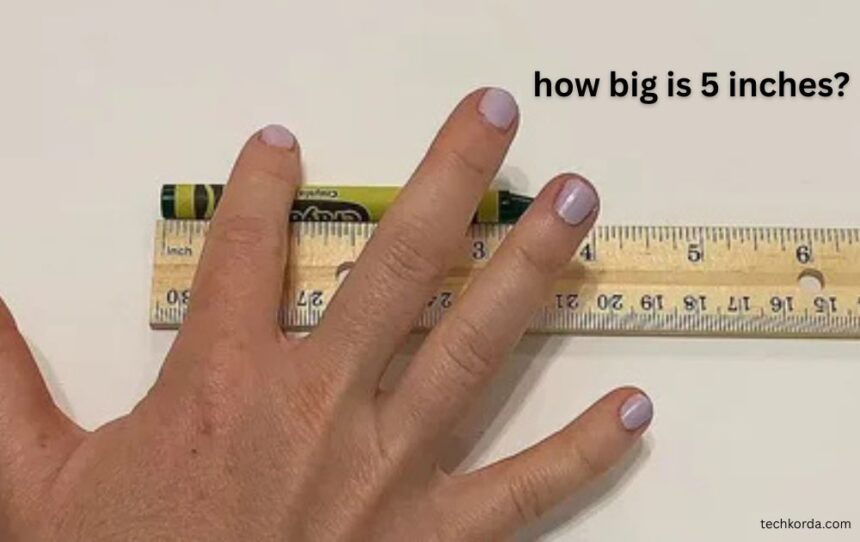
Getting a First Sense of Five Inches
Five inches is a measurement that feels small on paper but becomes very clear once you compare it to something familiar. It is roughly the length of a dollar bill or the width of a smartphone held upright in your hand. Most people underestimate how much five inches actually covers until they line it up next to a real object. Once you have that first mental image, everything else about this measurement starts to make sense.
Five Inches in Centimeters and Millimeters
In the metric system, five inches converts to about 12.7 centimeters, or 127 millimeters. This conversion matters because many countries outside the United States rely on centimeters for everyday measuring, from clothing to furniture. Knowing both figures allows you to shop, build, or design without confusion, no matter which system a product label uses. It also makes it easier to compare measurements across different tools, apps, or instructions you might come across.
Common Household Objects Around Five Inches
Look around your home and you will spot several everyday items that land close to five inches long. These quick comparisons make the size instantly easy to picture, without ever needing a tape measure.
- A standard smartphone stood upright
- A small pocket notebook
- A television remote control
- A slice of sandwich bread
- A tightly folded hand towel
Comparing Five Inches to a Human Hand
An adult hand, measured from the base of the wrist to the tip of the middle finger, often measures somewhere between five and seven inches, depending on the person. This makes your own hand a surprisingly reliable, always available reference tool. While it is not perfectly precise, it offers a quick and gentle way to judge distance while shopping, crafting, or rearranging a room. Many people use this trick without even realizing how accurate it can be.
Five Inches Next to a Smartphone
Modern smartphones typically range from about five to six and a half inches in screen height, which makes five inches a helpful anchor point when comparing phone sizes. A phone at the smaller end of that range would sit close to this five inch mark, giving you a modern, familiar object to visualize. This comparison is especially useful for anyone shopping online, where it can be hard to judge a product’s true scale from photos alone.
Why Small Measurements Are Easy to Misjudge
Small measurements like five inches are often harder to picture accurately than larger ones, simply because our eyes are less practiced at judging them. A few inches can look bigger or smaller depending on lighting, angle, or what is placed next to it in a photo. This is why relying on trusted comparisons, rather than guessing, leads to far more accurate results. Taking a moment to visualize rather than assume can save time and prevent mismatched purchases.
How to Estimate Five Inches Without a Ruler
If you do not have a ruler nearby, there are still simple ways to estimate five inches with reasonable accuracy. A credit card is about three and a half inches long, so five inches is roughly one and a half credit cards placed end to end. A standard pen is often close to five or six inches, offering another quick point of reference. These small tricks can be genuinely handy in moments when precision tools are not within reach.
What Does 21.5 Inch Mean on a Monitor
When a monitor is described as 21.5 inches, that number refers to the diagonal length of the screen, measured from one corner to the opposite corner. It does not describe the width or height directly, which is a common source of confusion for first time buyers. This diagonal measurement has become the industry standard because it gives a consistent way to compare screens of different shapes and aspect ratios. Understanding this helps set realistic expectations before a monitor even arrives.
The Real Width and Height of a 21.5 Inch Monitor
For a typical 21.5 inch monitor with a 16:9 widescreen ratio, the visible screen area works out to roughly 18.7 inches wide and 10.5 inches tall. That height is a little more than double our five inch reference point from earlier, which helps ground the number in something tangible. These dimensions represent only the screen itself, so the total footprint of the monitor, including its frame and stand, will typically be slightly larger in every direction.
How a 21.5 Inch Monitor Feels on a Desk
In practical terms, a 21.5 inch monitor is considered a compact to mid sized display, comfortable for most desks without dominating the available space. It leaves room for a keyboard, notebook, or second monitor beside it, which makes it a popular choice for smaller workstations. Many people find this size strikes a pleasant balance between having enough visible screen and still keeping their desk feeling open and uncluttered.
Is a 21.5 Inch Monitor Big Enough for Work
Whether a 21.5 inch monitor feels large enough depends heavily on how it will be used day to day. For browsing, writing, video calls, and general office tasks, it is generally considered more than sufficient. For more demanding work like video editing, detailed spreadsheets, or side by side multitasking, some users may eventually prefer a larger screen. Trying the size in person, when possible, remains one of the best ways to judge personal comfort.
Comparing a 21.5 Inch Monitor to Larger and Smaller Screens
Placed next to a smaller 19 inch monitor, a 21.5 inch screen offers noticeably more visible workspace without becoming bulky. Compared to a 24 or 27 inch monitor, it will feel more modest, though still perfectly capable for everyday tasks. This middle ground positioning is exactly why the 21.5 inch size remains popular for home offices, students, and secondary displays. It offers a practical step up from entry level screens without the cost or size of larger professional monitors.
Five Inches as Part of a Monitor’s Measurements
On its own, five inches is far too small for a usable monitor. It works best as a comparison tool for picturing just how much bigger a 21.5 inch screen really is.
- Five inches: about half the monitor’s screen height
- Two five inch lengths: roughly the screen’s height alone
- Nearly four five inch lengths: the screen’s full width
- Well over ten inches: where real monitor sizes typically begin
Understanding a Height of 5 Feet 5 Inches
Sometimes this topic is written informally as “5 5 inches,” which usually refers to a person’s height of five feet five inches rather than a flat five inch measurement. Five feet five inches converts to approximately 165 centimeters, a height considered common and unremarkable across most parts of the world. It is a helpful reminder that context matters greatly when interpreting measurements, since the same numbers can mean very different things depending on how they are written.
How 5’5″ Compares to Average Global Height
A height of 5’5″ sits close to the global average for adult height when men and women are considered together, though averages do vary by country and population. This height is neither unusually short nor unusually tall in most contexts, making it a genuinely typical and ordinary stature. Understanding where a height falls compared to global averages can offer a gentle sense of perspective, without turning into a comparison against any one individual.
Everyday Comparisons for Someone Who Is 5’5″
Someone who is 5’5″ tall will typically stand close to eye level with a standard kitchen counter and slightly below the average interior doorframe, which is usually around six feet eight inches. Car seats, public transportation seating, and most furniture are generally designed comfortably around this height range. These small, ordinary comparisons can help make an abstract number feel more like a lived, everyday experience rather than just a figure on paper.
Avoiding Confusion Between 5 Inches and 5’5 Inches
It is easy to see how “5 inches” and “5’5 inches” might be mixed up at a glance, even though they describe two completely different kinds of measurements. One refers to a short length you might use for a small object or screen, while the other refers to a person’s overall height. Paying close attention to the apostrophe and the surrounding words can prevent this kind of mix up, especially when reading quickly or skimming a product description.
Five Inches in Crafts, Packaging, and Design
Beyond electronics and height, five inches is a genuinely common measurement in crafting, gift wrapping, and small packaging design. Many greeting cards, coasters, and small boxes are built close to this size because it feels comfortable to hold and display. Designers often choose measurements like this specifically because they translate well across printing, shipping, and everyday handling. Recognizing this size on sight can make shopping for these kinds of items noticeably easier.
Five Inches in Clothing and Fashion Sizing
Clothing brands frequently use five inch increments when explaining the difference between sizes, particularly for measurements like sleeve length, inseam, or waist adjustments. A five inch difference between two sizes can noticeably change how a garment fits, which is why size charts often highlight this exact gap. Shoppers who understand what five inches actually looks like can read these charts with far more confidence, rather than guessing based on a label alone. This small measurement quietly shapes a surprising amount of the fitting process behind the scenes.
How Screen Resolution Relates to a 21.5 Inch Monitor
Screen size and screen resolution are related but separate concepts, and a 21.5 inch monitor typically pairs with a resolution of 1920 by 1080 pixels, commonly known as Full HD. This resolution determines how sharp text and images appear, while the 21.5 inch measurement determines how much physical space that image is displayed across. Together, these two numbers shape the overall viewing experience far more than either one alone. Knowing both helps buyers choose a monitor suited to their actual daily needs, rather than focusing on size alone.
Quick Reference: Five Inches at a Glance
For a fast mental checklist, five inches is about 12.7 centimeters, close to the length of a dollar bill, and roughly the width of a smartphone standing upright. It is shorter than most kitchen knives, longer than a standard house key, and about a third of a typical school ruler. Keeping a short list like this in mind makes it far easier to recognize five inches instantly in daily life. Small reference points like these quietly build real, lasting measurement confidence over time.
Conclusion
Whether the conversation is about a five inch object, a 21.5 inch monitor, or a height of five feet five inches, the real goal is always the same: turning a plain number into something you can actually picture. Once a measurement is tied to something familiar, like a hand, a phone, or a doorway, it becomes far easier to remember and apply. With just a few trusted comparisons in mind, sizes that once felt confusing can start to feel completely ordinary and easy to recognize. The next time a measurement like this appears on a label or a listing, it will feel less like a puzzle and more like something you already understand.