A Morning Full of Possibility
There is a particular kind of energy that fills a school building on the first morning of the year. Hallways smell faintly of fresh paint and new paper, and even the quietest students seem to walk a little taller, unsure of what the day will bring. Beneath the excitement, though, sits a familiar flutter of nerves that never quite disappears, no matter how many first days a student has already lived through. Thoughtful first day of school activities exist precisely to meet that flutter with warmth instead of pressure.
Why the First Day Sets the Tone
Educators often say that students decide within the first few hours whether a classroom feels safe, interesting, or worth their trust. That decision rarely comes from a syllabus or a list of rules; it comes from how the room feels and how people treat one another. A single first day of school activity, chosen with intention rather than habit, can quietly answer the question every student is silently asking: will I belong here? When that question is answered kindly, everything that follows becomes easier.
The Quiet Purpose Behind Icebreakers
Icebreakers sometimes get a bad reputation for feeling forced or embarrassing, but at their best they are simply small, low-risk ways for people to notice one another. A good icebreaker does not demand vulnerability; it invites it gently, offering an easy entry point like a favorite food or a summer memory. For students meeting a new teacher and new classmates all at once, that gentleness matters more than cleverness. The best activities feel less like an assignment and more like a conversation that happens to be structured.
All About Me Posters for Younger Learners
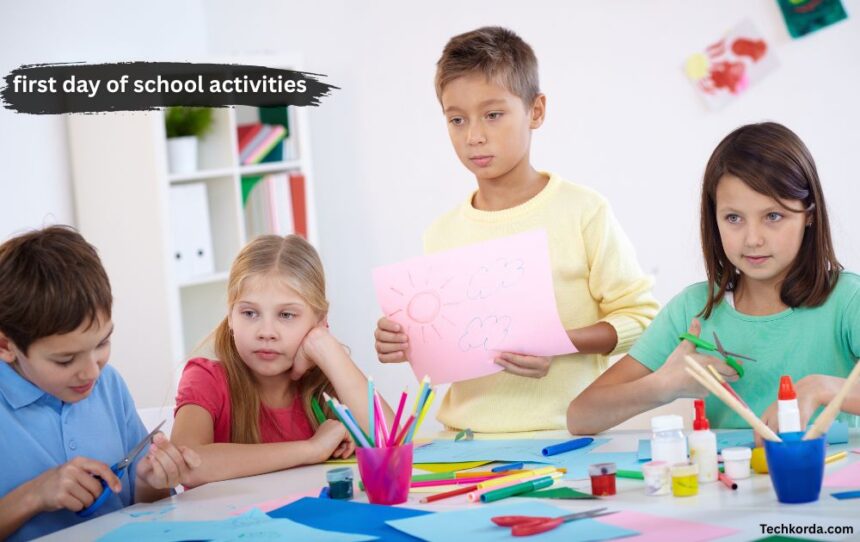
For elementary students, an all about me poster offers a gentle, low-pressure way to be seen on day one. Children simply draw or write about a few favorite things, then share them with a partner or small group.
- Favorite animal or toy
- A happy summer memory
- Favorite food or color
- Something they’re excited to learn this year
Classroom Scavenger Hunts and Familiar Spaces
Unfamiliar rooms can feel large and intimidating to a small child, which is why a simple scavenger hunt can be surprisingly powerful. Students search for classroom supplies, hidden notes, or friendly labels around the room, turning an unknown space into something they have already explored and mastered. The activity doubles as quiet orientation, teaching children where the pencils live or how the reading corner works without a single worksheet. By the time the hunt ends, the room no longer feels foreign; it feels like theirs.
Buddy Systems That Ease Early Anxiety
Pairing a new or anxious student with a steady, familiar buddy for the first day can soften almost any transition. The buddy might simply walk them to lunch, explain where the restrooms are, or sit beside them during an unfamiliar activity. This kind of quiet companionship rarely needs an official name or elaborate structure to work. What it offers instead is reassurance, the simple knowledge that no one has to figure out a new place entirely alone.
Rethinking First Day of School Activities Middle School Students Actually Enjoy
Middle schoolers occupy a delicate in between space, no longer children yet not quite teenagers, and it shows in how they respond to first day activities. The classic name and favorite color icebreaker often falls flat here, met with polite but visible discomfort. Effective first day of school activities middle school teachers rely on tend to feel more like natural conversation than performance, respecting that twelve and thirteen year olds are acutely aware of how they appear to peers. The goal shifts from forced sharing to quiet, low pressure connection.
Small Group Conversations Over Whole Class Sharing
Rather than asking every student to speak in front of the entire class, breaking into small groups of three or four tends to work far better for this age group. In smaller clusters, students can talk about their summer, a favorite show, or their hopes for the year without thirty pairs of eyes watching them. Teachers often find that the same shy student who stays silent in a whole class discussion becomes surprisingly talkative once the audience shrinks. Comfort, more than curriculum, unlocks genuine participation at this age.
Interest Surveys That Reveal Common Ground
A short, informal survey asking about favorite music, hobbies, or weekend activities can quietly reveal unexpected overlap among classmates who assumed they had nothing in common. Teachers sometimes turn the results into a simple class profile, showing students how many people share their taste in movies or their love of a particular sport. That small realization, we are more alike than I thought, does more to build classroom community than any formal team building exercise. It plants an early seed of belonging that can grow for months.
Locker and Schedule Scavenger Hunts for Middle School
Middle school often introduces students to lockers, changing classes, and more complex schedules for the first time, and that logistical shift can feel overwhelming on its own. A locker and schedule scavenger hunt transforms that confusion into a manageable, even enjoyable task, sending students to find their classrooms, practice their combinations, and locate key school spaces. Completing it with a partner adds a social layer that makes the practical parts of the day feel less clinical. By dismissal, the maze of hallways already feels a little more familiar.
Supporting Growing Independence
Middle school marks a genuine shift toward independence, and thoughtful first day activities can honor that shift rather than fight it. Giving students small choices, which icebreaker to try, which group to sit with, which supplies to organize first, signals trust in their growing judgment. That trust tends to be returned with better behavior and more genuine engagement than rigid, teacher directed routines ever produce. Respecting independence early in the year often pays quiet dividends for months afterward.
What First Day of School Activities High School Students Actually Value
By high school, most icebreakers feel painfully juvenile, and teenagers can sense insincerity from across the room. The most effective first day of school activities high school educators use tend to treat students as young adults capable of real reflection, not as children who need to be entertained into engagement. That shift in tone, from performance to genuine conversation, often makes the biggest difference in how the day is received. Teenagers respond far better to being asked something real than to being asked to perform enthusiasm.
Reflective Writing as a Gentle Opening
A short, private writing prompt asking students to describe a hope or a worry about the coming year can open surprisingly honest doors without requiring anyone to speak aloud. Some students write about wanting better grades; others quietly admit to feeling anxious about a difficult class or a social situation. Teachers who read these reflections, even briefly, often gain insight they would never receive through a spoken icebreaker. The privacy of writing gives teenagers room to be honest in a way public sharing rarely allows.
Collaborative Goal Setting for the Year Ahead
Rather than simply announcing expectations, many high school teachers invite students to help set some of their own. A brief goal setting exercise, where students name something academic and something personal they hope to achieve, creates a sense of ownership over the year rather than passive compliance. Revisiting those goals later, even briefly, reminds students that someone remembered what mattered to them. That small act of memory can matter more to a teenager than any lecture on responsibility.
Turning the Syllabus Into Something Approachable
Syllabus day has a well earned reputation for tedium, but reframing it as a light scavenger hunt can change the entire tone. Students search the document in pairs to find grading policies, deadlines, or classroom rules, then compare answers together. The information stays exactly the same, yet the delivery feels active rather than passive, curious rather than dutiful. A dry document becomes, briefly, something students actually engage with instead of skim.
Respecting Teenage Maturity Without Losing Warmth
Treating high schoolers as mature does not mean abandoning warmth or structure altogether. The most successful first day of school activities high school teachers design tend to balance genuine respect with clear, gentle guidance, avoiding both condescension and chaos. Teenagers notice quickly when an adult trusts them, and that noticing often shapes how much effort they are willing to give in return. Warmth and maturity, offered together, tend to earn far more buy in than either alone.
The Value of Simple Connective Games
Across every age group, simple games that require cooperation rather than competition tend to build connection quickly and painlessly. A quiet human bingo card, a two truths and-a-lie round, or a partner interview activity gives students a light structure for talking to people they might otherwise never approach. These games work not because they are clever, but because they lower the barrier to a first conversation. Once that first conversation happens, future ones tend to come more easily.
Classroom Environment as a Silent Teacher
Before a single activity even begins, the physical space itself communicates something to students. A room with visible name tags, welcoming decorations, or a clearly organized layout quietly signals that someone prepared for their arrival. Clutter and coldness send the opposite message, whether intended or not. Small, thoughtful touches, a seating chart designed to encourage conversation, a welcome note on each desk, often do more emotional work than any planned activity that follows.
The Teacher’s Presence and Tone
No activity, however well designed, can outweigh the tone set by the adult in the room. A teacher who greets students by name, makes eye contact, and stays visibly calm amid first day chaos communicates safety in ways no icebreaker can replicate. Students of every age read tone before they read content, deciding almost instantly whether an adult is approachable. That first impression, formed within minutes, often shapes the entire tenor of the relationship for the rest of the year.
Involving Families in the Transition
For younger students especially, the first day does not belong to the classroom alone; it belongs to families as well. A simple welcome letter home, a photo shared at pickup, or a short note describing the day’s highlights can ease a parent’s own first day nerves. That reassurance often trickles back to the child, who senses when a parent feels calm rather than anxious about the transition. Small gestures toward families extend the classroom’s warmth well beyond its walls.
Naming First Day Nerves Out Loud
One of the gentlest things an adult can do on the first day is acknowledge, plainly, that nerves are normal. A brief moment where a teacher admits to their own first day jitters, even as an adult starting a new year, can visibly relax a nervous room. Students often assume they are the only ones feeling uncertain, and hearing otherwise quietly loosens that isolation. Naming a feeling, rather than ignoring it, tends to shrink its hold almost immediately.
Balancing Fun With Enough Structure
Playfulness matters, but students of every age also quietly crave a sense of order on an unfamiliar day. A loose, predictable rhythm keeps things calm without feeling rigid.
- A short activity or game
- A brief instruction or task
- A quick break or transition
- Repeat the pattern through the day
Introducing Expectations Without Overwhelming
Rules and expectations matter, but delivering them all at once on day one rarely serves anyone well. Many effective teachers introduce only the most essential expectations first, saving finer details for the days that follow once trust has begun to form. This gradual approach prevents the first day from feeling like a lecture and allows relationships to develop before rules dominate the conversation. Students tend to internalize expectations more fully when they arrive gradually, wrapped in context, rather than all at once.
Journaling as a Quiet First Day Ritual
Across grade levels, a brief journaling moment at the end of the first day can offer valuable closure. Younger students might draw a picture of something that made them smile; older students might write a sentence or two about how the day felt. Teachers rarely need to collect or grade these reflections for them to hold value. The simple act of pausing to notice the day, rather than rushing straight to dismissal, teaches students that their experience matters.
Building a Classroom Community From Day One
Every first day of school activity mentioned here shares a single underlying purpose: helping a room full of strangers begin to feel like a community. That transformation rarely happens through a single grand gesture, but through many small, gentle moments layered across the day. A shared laugh during a game, a quiet conversation during a scavenger hunt, a moment of honesty in a reflection, each adds one more thread to a fabric that will hold the classroom together for months to come.
Carrying the Momentum Into the Weeks Ahead
The warmth generated on the first day rarely sustains itself without continued care in the days that follow. Teachers who revisit early activities, referencing a goal a student set or a fact learned during an icebreaker, show students that the connection formed was not a one day performance. That continuity reassures students that the classroom they walked into on day one is the same one they will return to tomorrow. Momentum, once built gently, is far easier to maintain than to recreate later.
A Gentle Beginning, Not a Grand Performance
In the end, the most meaningful first day of school activities are rarely the most elaborate ones. What students remember, often years later, is not the cleverness of a game but the feeling of being welcomed exactly as they were. A classroom that begins with patience, curiosity, and quiet warmth tends to carry that same spirit forward into October, January, and beyond. The first day is not a performance to get through it is simply the gentlest possible beginning to everything that follows.