A Season of Small, Meaningful Shifts
Spring 2026 has brought a wave of event tech news, but very little of it announces itself loudly. Instead, the changes are showing up in small, thoughtful details: a badge that quietly points you toward the right conversation, a planning dashboard that catches a scheduling conflict before it becomes a crisis. Across trending culture, tech events this April feel less like spectacles and more like carefully tended spaces. That is a meaningful shift worth sitting with for a moment.
Why April Feels Different This Year
There is a particular energy to April on the events calendar, a sense of momentum after a slower winter season. Event planning tech news this month reflects that energy, with new platforms and updates rolling out just in time for a busy spring and summer of conferences. Teams that spent the colder months testing tools are now putting them into practice, and the early verdict feels cautiously optimistic. It is a season of trying things out loud, in front of real audiences.
Wearables Move From Novelty to Necessity
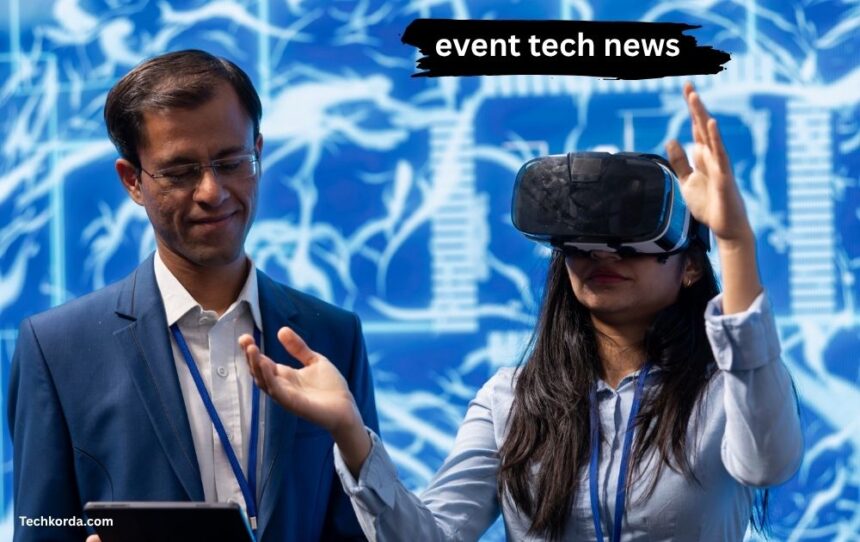
Smart badges and wearable tech have quietly shifted from a fun add on to something attendees actually rely on, doing practical work instead of just looking impressive.
- Guides attendees to the right session or contact without wandering
- Replaces guesswork with quiet, real time direction
- Signals a broader shift toward function over novelty in event tech
AI Personalization That Still Feels Human
AI is everywhere in event planning this year, but the best tools use it quietly, suggesting the right session or contact at the right moment rather than replacing human judgment.
- Surfaces relevant sessions, people, or resources in the moment
- Feels like being understood, not tracked
- Keeps human judgment central rather than automating it away
Networking Reimagined Through Data
Structured networking has become a serious research focus for event organizers this year, not just a nice to have feature tacked onto an agenda. Data on attendee interests and goals is increasingly used to suggest meaningful introductions rather than leaving connection entirely to chance. Encore’s ongoing experience design research points to this kind of intentional matchmaking as one of the strongest drivers of real value at live events. It turns a hallway full of strangers into something closer to a curated conversation.
Sponsors Are Asking Harder Questions
Sponsor expectations have quietly shifted this year, and event teams are feeling it. A logo on a banner used to be enough to justify a sponsorship budget, but that era is fading fast. Sponsors now want evidence of real engagement, measurable interest, and follow through after the event ends. This pressure is pushing event technology toward better tracking and reporting, not for its own sake, but to genuinely prove that connection happened.
Measuring What Actually Changes
Attendance numbers alone no longer tell the whole story of a successful event, and organizers know it. The more meaningful question is what shifted afterward: a partnership formed, a deal accelerated, a relationship deepened. Event technology in 2026 is increasingly built around this kind of outcome based thinking, and it represents a maturing of the industry’s relationship with its own tools. Numbers still matter, but only when they point toward something real.
Intelligent Assistants Behind the Scenes
Much of the most useful event planning tech news this year is happening quietly behind the scenes, powered by AI driven assistants and chatbots. These tools are absorbing the smaller, repetitive tasks that used to eat away at a planner’s day, from answering attendee questions to flagging last minute room changes. Production teams get real time coordination without extra staffing, and attendees get faster answers. It is unglamorous work, but it makes everything else run more smoothly.
Task Management Finds Its Calm
Event teams have historically relied on scattered spreadsheets, sticky notes, and group chats to keep track of who is doing what. That is changing as more intuitive task management platforms take hold this year, offering centralized dashboards and automated reminders that quietly keep everyone aligned. The result is less last minute scrambling and more mental space for the parts of event work that genuinely need a human touch, like comforting a nervous first time speaker.
Sustainability Becomes a Default, Not a Feature
Sustainability used to be treated as a special initiative, something highlighted separately from the rest of an event’s planning. In 2026, it is becoming a quiet default built into how events are designed from the start, from material choices to hybrid attendance options that reduce unnecessary travel. This shift reflects a broader cultural mood, one where organizations want their events to reflect genuine care for their communities, not just good optics.
Hybrid Attendance Without the Afterthought Feeling
Roughly a third of event budgets are now going toward virtual and hybrid components, according to recent industry research, and that number continues to climb. What has changed is not just the investment but the intention behind it. Remote attendees are increasingly treated as full participants rather than an afterthought bolted onto the in person event. Interactive streaming and real time participation tools are making that inclusion feel far more genuine than it once did.
Security and Trust Behind Every Login
As event technology becomes more data rich, trust has become just as important as convenience. Preemptive cybersecurity and clearer digital provenance are quietly becoming standard expectations across event tech stacks this year, protecting everything from attendee information to sponsor data. It is not the flashiest part of event tech news, but it may be the most foundational, since none of the personalization or convenience matters if people do not feel safe using it.
Austin’s Reputation for a Busy Spring
Few cities capture the current mood of event tech quite like Austin, where the spring calendar has been especially full this year. The city’s deep bench of tech companies, startups, and investors gives it a natural gravitational pull for conferences, summits, and casual meetups alike. Austin tech events news this April reflects a community that values both ambition and approachability, a place where big ideas and small conversations are allowed to matter equally.
The RH ISAC Cybersecurity Summit Arrives Downtown
Mid April brings the RH ISAC Cybersecurity Summit to the Hyatt Regency in downtown Austin, gathering retail and hospitality security professionals for several days of shared learning. Sessions blend expert led talks with collaborative workshops focused on real, practical problem solving rather than abstract theory. It is a reminder that even in a city known for buzz and big product launches, some of the most valuable tech gatherings are the quieter, deeply focused ones happening just out of the spotlight.
Smaller Rooms, Real Conversations
Alongside the larger summits, Austin’s spring calendar is full of smaller, informal gatherings that rarely make headlines but shape the local tech culture in lasting ways. AI and startup mixers, founder pitch nights, and casual after work meetups fill the space between the big conferences. These smaller rooms often hold the most honest conversations, the ones where people admit what is actually hard about their work instead of performing polish for a stage.
Founders Finding Each Other
A recurring theme in Austin tech events news this spring is how much of the city’s momentum comes from founders simply finding one another. Pitch nights and investor mixers are less about formal presentations and more about early, exploratory conversations that sometimes turn into real partnerships. There is a low key confidence to these gatherings, a sense that good ideas will find their people eventually, given enough casual rooms to meet in.
The Community Beneath the Conferences
It would be easy to measure Austin’s tech scene only by its headline conferences, but the deeper story lives in its community rhythms. Regular mixers and social meetups create a steady undercurrent of familiarity, where the same faces show up month after month, building trust slowly over time. That kind of continuity is hard to manufacture with technology alone, and it may be exactly why Austin’s tech culture feels so warm despite its scale.
Looking Toward InnoTech Austin
As April moves toward May, attention is already turning to InnoTech Austin, which returns to the Palmer Events Center for a full day of networking, technology demonstrations, and professional development. It draws both local and regional attendees looking for practical takeaways rather than abstract inspiration. Its steady, dependable presence on the calendar each year makes it something of an anchor point, a reliable gathering that the surrounding events seem to orbit around.
A City Where Scale and Intimacy Coexist
What makes Austin’s tech event culture distinct is not any single conference or mixer, but the way scale and intimacy manage to coexist there. A major summit can happen downtown the same week as a handful of small founder dinners across town, and both feel equally at home in the city’s rhythm. That balance is rare, and it offers a useful model for what event technology and event culture more broadly might aspire to elsewhere.
What Event Planners Are Actually Asking For
Beneath all the trending tools and platforms, what event planners consistently ask for has stayed remarkably consistent: less friction, clearer communication, and more time to focus on the human parts of their work. Technology that adds complexity without solving a real problem tends to get quietly abandoned within a season. The tools gaining real traction in 2026 are the ones that planners barely notice using, because they simply make the day easier.
Guarding Against Over Automation
Not every trend in event technology deserves uncritical enthusiasm, and many organizers are beginning to voice a gentle caution about over automation. When every interaction becomes mediated by an app or an algorithm, something of the spontaneity that makes events valuable can get lost. The most thoughtful teams are treating automation as a support system for human connection, not a replacement for it, and that distinction seems to matter more each year.
Knowing Where Technology Should Step Back
Perhaps the most mature theme running through this year’s event tech news is a growing awareness of where technology should simply step back. A well designed badge or app should fade into the background once its job is done, leaving room for an actual conversation to unfold. The best event technology in 2026 is not the kind people talk about afterward, but the kind that quietly made the good moments possible.
Culture Catching Up With Capability
For several years, event technology has developed faster than the culture around how to use it thoughtfully. That gap finally seems to be narrowing in 2026, as organizers grow more discerning about which tools genuinely serve their attendees versus which ones simply look impressive in a sales demo. This shift toward discernment, rather than novelty for its own sake, marks a quiet but important maturing of the industry as a whole.
What This Means for Attendees
For the people actually walking into these events, all of this translates into something simple: gatherings that feel a little easier to navigate and a little more attuned to why they came. Fewer wasted moments spent lost in a hallway, fewer missed connections that a smarter badge could have made possible, fewer sponsor booths that feel hollow rather than genuine. The technology fades, but the improvement in experience is very real.
A Gentle Kind of Progress
If there is one thread worth carrying forward from this season of event tech news, it is that the most meaningful progress here has been a gentle one. Not louder gadgets or flashier keynotes, but quieter tools that clear space for people to actually be present with each other. In a year full of headlines about artificial intelligence changing everything, it is worth remembering that the most valuable change might simply be more room for genuine connection.
Closing Thought
Whether it shows up in a smart badge in a crowded exhibition hall or a quiet mixer in an Austin backyard, the throughline across this spring’s event tech news is remarkably consistent: technology works best when it makes people feel more seen, not more managed. That is a modest ambition compared to the industry’s usual talk of disruption, but it may be the one that actually lasts. Sometimes the gentlest progress is the kind worth trusting most.