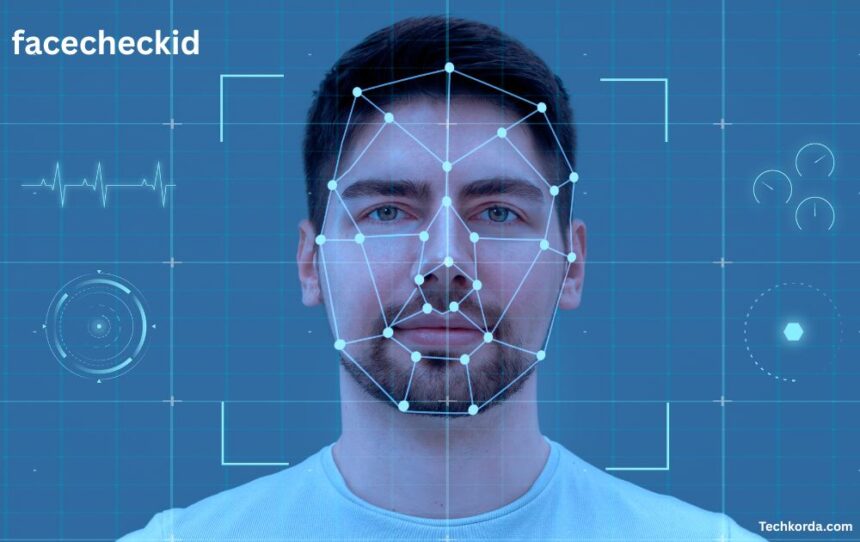
There’s something quietly remarkable about the idea that a single photograph can now open a window into someone’s online life. FaceCheckID often searched for as FaceCheck ID, FaceCheck.ID, or simply Facecheck has become one of the more talked about tools in this space. It invites a simple action upload a photo and returns something far less simple a trail of where that face may have appeared across the internet. For anyone curious about how such a tool works, and what it might mean for the people whose faces pass through it, a calm and thoughtful look is worth taking.
What Is FaceCheck.ID?
FaceCheckID is a facial recognition search engine built specifically to help people find where a face has appeared online. Rather than matching colors, shapes, or general image similarity the way a typical reverse image search does, it focuses entirely on biometric facial features. A user uploads a photograph, and the system analyzes it, searching a vast index of publicly available images for faces that share the same underlying geometry. The result is a tool that feels less like a search engine and more like a specialized detective, built for one very particular job.
The Idea Behind Facial Recognition Search
The concept driving tools like this one is fairly intuitive once you sit with it for a moment. Every face has a unique structure the spacing between the eyes, the width of the nose, the angle of the jawline and these measurements stay fairly consistent across different photos of the same person, even as lighting, expression, or age change. Facial recognition software, the same kind that powers FaceCheckID, is designed to translate that structure into a kind of mathematical fingerprint. Once that fingerprint exists, it can be compared against millions of others in search of a genuine match.
How the Matching Technology Works
Behind FaceCheckID’s simple upload button lies a quietly sophisticated process that turns one photo into a searchable digital signature.
- Measures key facial points eye spacing, jawline, nose shape, and dozens more
- Converts those measurements into a unique facial signature
- Compares that signature against a vast index of faces gathered from across the web
- Ranks results by structural closeness, not just visual similarity
Uploading a Photo and Getting Results
Using FaceCheckID itself tends to be refreshingly straightforward. A person selects a clear photo showing a face, ideally one taken at a reasonable angle and resolution, and submits it for analysis. Within roughly fifteen to thirty seconds, the system returns a list of potential matches, each linked to the page where that image was found. This might be a social media profile, a blog post, a video thumbnail, or a news article, giving the searcher a sense of where else that face has surfaced online. The speed of the process is part of what makes it feel so different from manually scrolling through search results by hand.
Understanding Match Certainty Scores
Every result FaceCheckID returns comes paired with a confidence score, often referred to as a match certainty rating, which typically ranges from around fifty percent up to a full one hundred. A lower score suggests a weaker, less reliable connection between the uploaded photo and the result, perhaps sharing some general resemblance without a strong structural match. A higher score, closer to the top of the scale, suggests a much stronger likelihood that the two images depict the same person. Reading these scores with a bit of healthy skepticism, rather than treating them as absolute proof, tends to lead to more sensible conclusions.
Where the Matches Come From
The index behind FaceCheckID draws from a wide range of publicly accessible corners of the web. This includes personal social media profiles, professional pages, blog posts, video platforms, and news coverage, as well as certain public safety databases in some cases. Because so much of modern life leaves a visual trace somewhere online, even a person who feels fairly private may find that a photo or two has been indexed without their direct knowledge. This breadth is part of what makes the tool powerful, and also part of what makes it worth approaching thoughtfully.
Verifying Identities in Online Dating
One of the more common and relatable uses of FaceCheckID involves online dating, where trust has to be built without the benefit of an in person meeting. Someone who feels uneasy about a match perhaps their photos look a little too polished, or their story doesn’t quite add up might use a face search to see whether the same images appear elsewhere under a different name. This can offer a gentle form of reassurance, or in some cases, an early warning sign that something isn’t quite right. It’s a small act of caution in a space where caution is often warranted.
Protecting Families and Loved Ones
Beyond dating, many people turn to FaceCheckID out of a protective instinct toward the people they care about. A parent might want a little extra peace of mind about who their teenager is chatting with online, or someone might want to confirm that a new acquaintance is genuinely who they claim to be before letting them closer into their life. Used sparingly and with good judgment, this kind of verification can feel less like suspicion and more like ordinary care, the digital equivalent of trusting but gently checking.
Helping Locate Missing Persons
There is also a quieter, more hopeful side to FaceCheckID that deserves mention. Facial recognition databases have occasionally been expanded specifically to include photos of missing individuals, with the aim of helping reconnect them with the people searching for them. In healthcare settings, similar tools have been used to help identify patients who are unable to communicate who they are, offering hospital staff a path toward reaching their families. These applications show that the same underlying technology capable of raising privacy questions can, in the right hands, also offer real comfort to people in difficult situations.
Assisting Investigators and Journalists
Professionals who spend their days verifying facts also find genuine use for FaceCheckID. Investigators researching a subject, journalists confirming that a source is who they claim to be, and researchers piecing together an open source investigation often rely on this kind of technology as one piece of a larger puzzle. It rarely stands alone as proof of anything, but it can point toward useful leads, corroborate other evidence, or occasionally raise a red flag worth exploring further. In these professional contexts, the tool tends to be treated with the same careful skepticism as any other single source.
The Question of Consent and Privacy
None of FaceCheckID’s usefulness erases a deeper question worth sitting with: the people whose faces appear in these results rarely gave explicit permission for their photo to be searchable in this way. A photo shared years ago for an entirely different purpose can resurface in someone else’s search results, connected to their name and their other public accounts. This isn’t necessarily a reason to condemn the technology outright, but it is a genuine reason to hold it with some care, remembering that behind every match is a real person who may not know they’ve been searched at all.
Being Mindful of How We Use the Tool
Because the same capability that makes FaceCheckID helpful for verifying a kind stranger could, in someone else’s hands, be turned toward tracking or unsettling a person who wants to be left alone, a bit of self reflection is worth building into how it gets used. It helps to ask honestly why a search is being done, whether the person being searched would feel comfortable knowing about it, and whether the information will be used to protect someone or simply to satisfy curiosity. These small pauses don’t take away from the tool’s usefulness; they simply keep it pointed toward its better purposes.
The Opt Out Option for Personal Photos
For anyone who would rather not appear in these kinds of results at all, it’s worth knowing that FaceCheckID, like other reputable facial search platforms, generally offers some form of opt out process. This typically allows an individual to request that their own photos be removed from the index, giving them a measure of control over their digital footprint. Taking advantage of this option can offer real peace of mind for people who feel uneasy about being searchable in this way, and it’s a reminder that privacy, while harder to guard than it once was, hasn’t disappeared entirely.
Using Results as a Starting Point, Not a Verdict
Whatever the reason for a FaceCheckID search, it’s worth treating the results as a beginning rather than a conclusion. A strong match certainty score suggests a likely connection, but names, contexts, and stories still deserve to be checked against other sources before any firm decision gets made about a person’s identity or intentions. Facial geometry can occasionally produce false positives, especially among people who happen to share similar features, so a little extra verification goes a long way toward avoiding an unfair or mistaken judgment about someone.
Comparing FaceCheck.ID to General Reverse Image Search
It’s easy to lump this kind of tool together with familiar services like reverse image search, but the two work quite differently underneath the surface. General reverse image tools typically look for visually similar images as a whole, comparing colors, composition, and shapes across an entire picture. FaceCheckID, by contrast, narrows its focus specifically to facial structure, which allows it to recognize the same person across very different photos, angles, or even years apart. This specialization is precisely what makes it more effective for identity related searches, even as it raises more particular questions about consent and privacy along the way.
Recognizing the Limits of the Technology
As capable as FaceCheckID’s facial matching has become, it still isn’t infallible, and it helps to keep that in perspective.
- Poor lighting, extreme angles, or heavy filters can weaken results
- Natural changes in a face over the years can make matching harder
- Similar looking strangers can occasionally trigger a moderate confidence score
- Best treated as one helpful signal among several, not a final verdict
A Few Practical Tips Before You Search
A handful of small habits can make any FaceCheckID search more useful and more responsible at the same time. Choosing a clear, well lit, front facing photo tends to produce far more reliable results than a blurry or heavily angled one, so it’s worth taking a moment to pick a good image. Trying more than one photo of the same person, when available, can also help confirm a match rather than relying on a single uncertain result. And whenever a search touches on someone else’s identity, pausing to ask whether the search is fair, necessary, and respectful of that person’s privacy is a habit worth keeping close.
A Balanced Way Forward
In the end, tools like FaceCheckID reflect something deeply human: our long standing wish to know who we’re really dealing with, now paired with technology that can search further and faster than we ever could alone. Used thoughtfully, it offers real reassurance to people navigating uncertain online relationships, and occasionally, it offers something even more meaningful, like a lead toward a missing loved one. Used carelessly, the very same tool can just as easily cause quiet harm to someone who simply wanted to be left in peace. The difference, as with most powerful things, tends to come down to the care and intention we bring to using it.